
Safeguarding
This page contains information on our safeguarding policies.
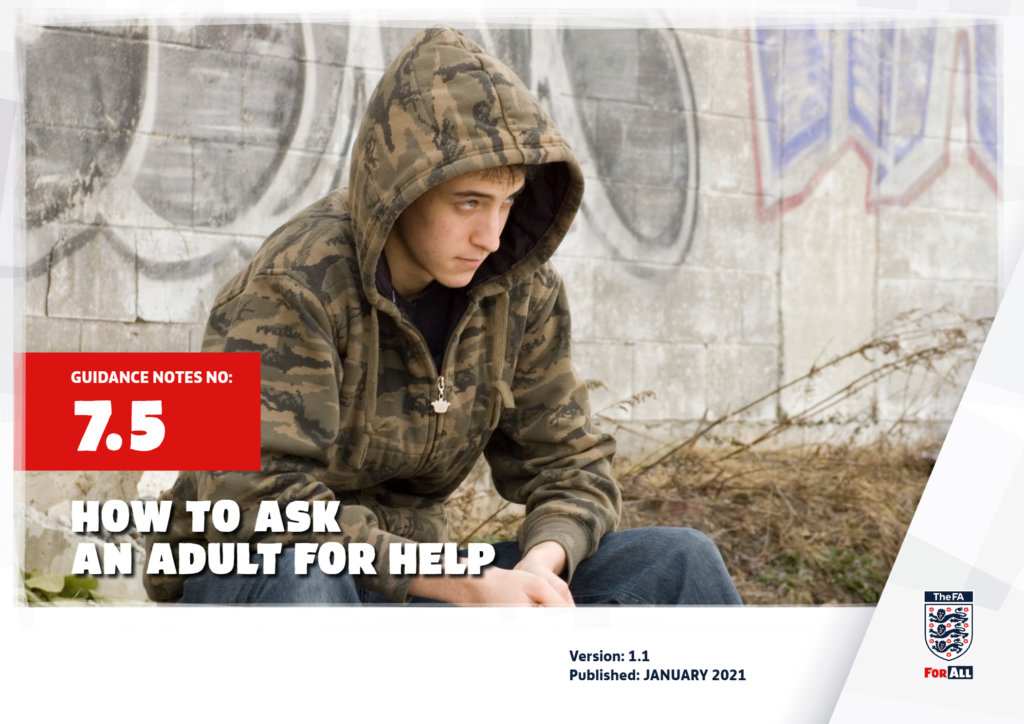
How to Ask an Adult for Help
Below is a plain-text version of FA Guidance Note 7.5. Content sourced from Childline.
Tips for asking for help
If something is bothering you, or there is an issue you cannot sort out on your own, talk to an adult you trust. Asking for help is not always easy. These tips from Childline might make it feel a bit more manageable.
- Pick someone you feel safe with.
- Plan what you want to say.
- Choose a good time, when they can listen properly and are not busy or distracted.
- You are in control of how much you share. You do not have to say everything if you do not want to.
- If you want to, you can ask them to keep what you say private before you start.
Starting a hard conversation
Sometimes the first sentence is the hardest part. You could try one of these:
“I want to tell you something, but I do not know how.”
“This is hard for me to say, but I have something important to tell you.”
“I need some advice on something I am stressed about.”
A note about keeping things private
Different adults follow different rules about keeping things private or confidential. Doctors and teachers, for example, do not all work to the same rules.
- Sometimes they have to pass something on. Sometimes it is their own decision.
- If you are worried about what stays private, you can ask about it before you tell them anything. Most adults will explain their policy.
- If an adult is worried about your safety, they may need to tell someone else. They do this so you can get the right help.
- Passing something on is about keeping you safe. If you are worried about it, say so and talk it through with the person you are telling.
The Full Leaflet
Talk to us
Club Safeguarding Officer
Officer Name
Officer Contact
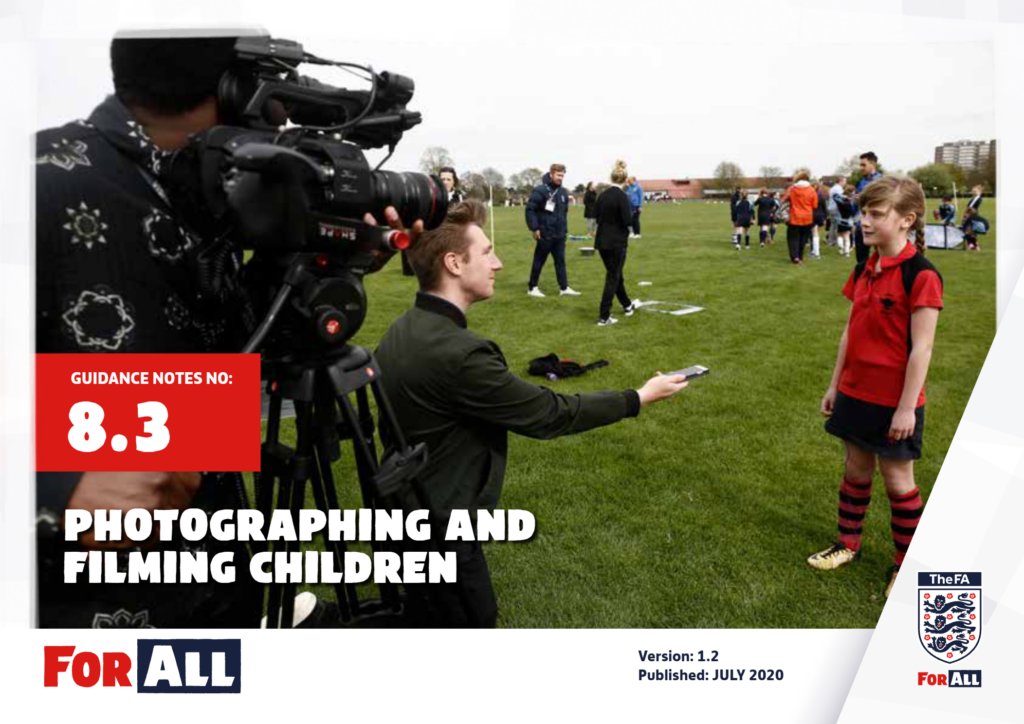
Photographing and Filming Children
Below is a plain-text version of FA Guidance Note 8.3. Drawn from NSPCC CPSU advice.
Clubs, parents and children often want to celebrate footballing successes with photos and film. Recording a child’s progress through the season is widely seen as part of the enjoyment of the game, and some coaches use photos or film to help a player develop.
Photos and film on websites, social media, posters and in the press can carry direct and indirect risks to children if they are not handled well. The FA supports appropriate photography and filming, and asks everyone who films or takes photos in football to know and follow this guidance.
In short
- Appropriate photos and film are welcome. The aim is to reduce the risk of harm, not to stop them.
- Get written parental consent before using a child’s image in public.
- Never take photos or film in changing rooms, showers or toilets.
- Keep names and personal details away from images.
- Store photos and film securely, and know how to report a concern.
Potential risks
Inappropriate taking or use of photos and film
Some people set out to take photos or film in ways that are harmful or illegal, such as:
- Children changing.
- Photos taken in toilets.
- A camera held at ground level to take photos up girls’ skirts.
- Ambiguous images used out of context by others.
- Images copied and edited to create child-abuse content.
- Images shared privately online that get re-shared and end up in public.
Identifying, contacting or grooming a child
When a photo comes with personal details like a full name or address, it becomes easier for others to identify the child. This has led to children being found, contacted or groomed. Even without those details, information about a child’s school, club or favourite team can be used to groom them.
The risk of a child being identified or contacted is higher:
- Where legal restrictions apply, for example a child in local-authority care or placed with an adoptive family.
- Where contact with one parent is restricted after a separation, for example in domestic violence cases.
- Where a child may be a witness in criminal proceedings.
Commissioning professional photographers and local media
Photographer here includes anyone filming. If you bring in a professional photographer or invite the media, agree expectations early and plan ahead:
- Give a clear brief on what counts as appropriate content and behaviour.
- Tell them about your club’s commitment to safeguarding.
- Agree who will hold the photos and film, how long they keep them, and what they will do with them, such as selling prints or passing thumbnails to the club.
- Issue the photographer with ID that is worn at all times.
- Set out where photography is not allowed, such as toilets, changing areas and first-aid areas.
- Explain how to identify, and avoid photographing, children without parental consent.
- Do not allow unsupervised access or one-to-one sessions.
- Do not allow sessions away from the event, such as at a young person’s home.
- Tell participants and parents or carers beforehand that a professional photographer will be there.
When parental consent is not given
Clubs and organisers need a way for photographers to know which children should not appear in close-up photos or film. This might be a badge, sticker or wristband, or a system for the photographer to check with the organiser or team manager, so it is clear who should be left out.
Common sense steps to keep everyone safe
Most photos and film are appropriate and taken in good faith. These steps help keep children safe.
Do
- Share this guidance with everyone who joins the club, including officials and parents or carers.
- Get written parental consent before using a player’s photo or film in public, such as on the club website, a Facebook page or in a newspaper.
- Protect any child under care proceedings with legal restrictions by keeping their image out of the public domain. The Club Annual Membership Information and Consent Form covers this (see Guidance Note 8.2).
- Make sure everyone featured is suitably dressed, at least a vest or shirt and shorts.
- Aim for photos that show the full range of youngsters taking part, including boys and girls, disabled people and ethnic minority communities.
- Remind parents, carers and spectators that sharing photos or film alongside details about children on social media can have negative consequences, and that care is needed with tagging.
- Set up clear ways to report and handle concerns, including how to contact the Police when needed.
Don’t
- Publish photos with someone’s full name unless you have written consent and have told the parents or carers how the photo will be used.
- Put player profiles online with photos and detailed personal information.
- Reuse an image for something other than what was first agreed, for example publishing a clubhouse picture in the local press.
- Allow photos or film in changing rooms, showers or toilets, including on mobile phones.
- Include alcohol or gambling advertising in photos or film of children.
Remember
- Taking appropriate photos or film in a public place is not an offence, even if you are asked not to.
- No-one has the right to decide who can and cannot take photos on public land.
- If you have serious concerns about a possible child protection issue, call the Police. Only do this where you believe someone may be acting unlawfully or putting a child at risk.
- On private land, the owner decides whether photography or filming is allowed. They need to make this known in advance, and can ask someone to leave if they do not comply.
- Try not to use footage of people wearing jewellery, as wearing it while playing goes against the Laws of the Game and is a health and safety issue.
- Swimming as a club social activity carries a higher risk of misuse than football. For this, footage should focus on the activity rather than one child, avoid showing a child’s full face and body, for example showing them in the water or from the waist or shoulders up, and avoid angles that could be misread or misused.
If you are concerned about the inappropriate use of photos or film, report it to your County FA Designated Safeguarding Officer or the FA Safeguarding Team at [email protected].
Filming as a coaching aid
Coaches who use filming to help coaching should tell parents, carers and players that it is part of the programme, and take care when storing the clips. Parental consent must be in place first. This can be gathered at the start of the season through the Club Annual Membership Information and Consent Form (see Guidance Note 8.2).
General photography and filming of events
Organisers often want wide-angle or general footage of an event, the venue, and opening or closing ceremonies. It is usually not practical or proportionate to get consent from every child for this, or to stop it because a few parents object. Organisers should make clear to everyone that this kind of footage will be taken, and why.
Secure storage
Photos and film of children must be kept securely:
- Keep hard copies in a locked drawer.
- Keep digital photos in a protected folder with restricted access.
- Do not store photos or film on unencrypted portable equipment such as laptops, memory sticks or phones.
For clubs and leagues:
- If you store and use photos to identify children and adults for official purposes, such as ID cards, follow the legal requirements for handling personal information.
- For data protection and privacy guidance, see the Information Commissioner’s Office at ico.org.uk.
Misuse and manipulation of photos and film
Someone with bad intent may target a vulnerable child to take footage that is then uploaded or shared with others who have a sexual interest. Sometimes this footage is used to threaten or force a child into unwanted, illegal sexual activity. It can also be part of wider bullying meant to humiliate a young person. Even as a joke between friends, and without abusive intent, a young person who takes and shares inappropriate footage may be committing a serious offence and could face prosecution.
Reporting a concern
Everyone involved, including officials, volunteers, children and parents or carers, should know they can report concerns about inappropriate or intrusive photography or filming. That covers the way it is done, who is doing it, or where.
You can report to:
- The event organiser or another official.
- The Event Designated Safeguarding Officer.
- The Club Welfare Officer.
- The County FA Designated Safeguarding Officer.
- The FA Safeguarding Team at [email protected].
There should be a safeguarding procedure so reported concerns are handled like any other child-protection issue. Concerns about a professional photographer should also go to their employer.
To report possibly unlawful material online, contact the Internet Watch Foundation:
- Email: [email protected]
- Phone: 01223 237700
- Website: iwf.org.uk
This guidance draws on advice from the NSPCC CPSU, available at thecpsu.org.uk/help-advice/topics/photography.
The Full Guide
To report possibly unlawful material online, contact the Internet Watch Foundation:
- Email: [email protected]
- Phone: 01223 237700
- Website: iwf.org.uk
Where to get further help
This guide is based on guidance from Kidscape, a charity that works to prevent child bullying. You can email the Kidscape team at [email protected] from Monday to Friday, or visit kidscape.org.uk. Parents and carers who need advice can contact the Kidscape Parent Advice Line first.
For parents and carers
For young people
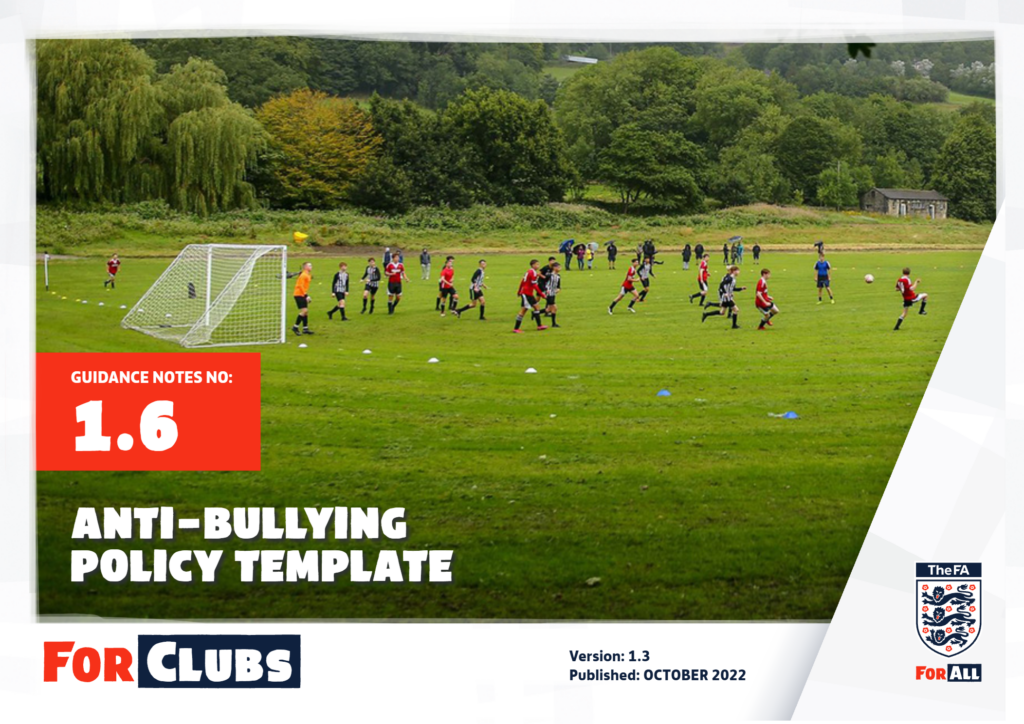
Hucknall & Linby Harriers FC’s Anti-Bullying Policy
Our statement of intent
We want a caring, friendly and safe environment for all our members, so everyone can take part in football feeling relaxed and secure. Bullying of any kind is not acceptable at Hucknall & Linby Harriers FC. If it does happen, every member, parent and carer should feel able to tell the club, and know it will be dealt with quickly and properly.
We are a telling club. Anyone who knows that bullying is happening is expected to tell the Club Welfare Officer, Charlie Moore, or any committee member. Hucknall & Linby Harriers FC will play its part in teaching players to treat each other with respect.
What is bullying?
Bullying is the repeated, deliberate hurting of one person or group by another, where there is an imbalance of power. It can happen face to face or online, and it takes many forms.
- Verbal: name calling, constant teasing, mocking, taunting and threats.
- Physical: any physical violence, intimidating behaviour, theft, or deliberate damage to belongings. This includes hitting, kicking and pushing.
- Emotional: leaving people out, tormenting, ridiculing, humiliating, setting people up and spreading rumours.
- Cyberbullying: using digital technology to bully, usually through messages or actions meant to threaten, upset or humiliate.
Examples of cyberbullying include:
- Abusive comments, rumours, gossip and threats sent using digital tools, including internet trolling.
- Sharing pictures, videos or personal information without consent, meaning to cause harm or humiliation.
- Hacking into someone’s email, phone or online profiles to take and share personal information, or to send hurtful content while pretending to be them.
- Setting up websites meant to harm, mock or spread malicious rumours about someone.
- Pressuring someone to do something they do not want to do, such as sending a sexually explicit image.
Hucknall & Linby Harriers FC will make sure our online channels such as our website are used appropriately, and will deal with any online bullying quickly and in line with this policy.
People can be targeted for any reason, but bullying often focuses on difference and can be a form of wider discrimination. For example, bullying may be:
- Racist: aimed at ethnicity, skin colour, language, or religious or cultural practices.
- Homophobic, biphobic or transphobic: aimed at someone’s actual or perceived sexuality or gender.
- Sexual or sexist: sexual or sexist behaviour meant to cause offence, humiliation or intimidation.
- Disablist: aimed at a disability or special educational need.
- Aimed at any difference: looks, weight and height, hair colour, wearing glasses or braces, acne, psoriasis and eczema, scars, marks or conditions of the face or body, body odour, poverty, gifts and talents, or family situation such as divorce, bereavement or homelessness.
Everyone has the right to be treated with respect, and no-one deserves to be bullied. People who bully need to learn different ways of behaving. Hucknall & Linby Harriers FC takes its responsibility to respond quickly and properly seriously.
Procedures
- Report bullying to the Club Welfare Officer or a member of the club committee.
- For serious bullying, refer to the County FA Designated Safeguarding Officer for advice, and possibly to the FA Case Management Team.
- Tell the parents or carers, and invite them to a meeting to discuss the problem.
- Involve the police if it is necessary and appropriate.
- Investigate the behaviour or threats, and stop the bullying quickly.
- Try to help the person bullying to change their behaviour.
- If mediation fails and the bullying continues, start disciplinary action under the club constitution.
Recommended club action
If the club decides it is right for them to deal with the situation, follow these steps.
- Try reconciliation by bringing the people together. A genuine apology may solve the problem.
- If that does not work or is not suitable, a small panel (for example the Chairperson, Club Welfare Officer, Secretary and committee members) meets the parent or carer and the child raising the concern, to get the details. Take minutes and agree them as a true account.
- The same panel meets the person accused and their parent or carer, puts the concern to them, and hears their side. Take minutes and agree them.
- If the panel decides bullying has happened, warn the person and put them on notice of further action, such as temporary or permanent suspension if it continues. Consider whether a reconciliation meeting is right at this point.
- In some cases the parent or carer of either player can be asked to attend training sessions, if they can and if it helps. The committee monitors things for a while to make sure the bullying does not happen again.
- Make sure all coaches working with both people know about the concern and the outcome, such as the warning.
When an adult is reported for bullying anyone under 18 at the club
- Tell the County Designated Safeguarding Officer, who will advise on what to do. This may include action by the FA Safeguarding Team.
- Where the concern is about a team manager, official or coach, the FA’s Safeguarding Children Education Programme may be recommended.
- More serious cases may be referred to the Police or Children’s Social Care.
Prevention
- The club will have a written constitution that sets out acceptable behaviour for all members. The anti-bullying policy is part of it.
- All members, parents and carers sign to accept the constitution when they join.
- The Club Welfare Officer will raise awareness of bullying and why it matters, and if issues come up, will consider meeting members to talk it through openly.
The Full Anti-Bullying Guide
To report bullying please contact:
- Charlie Moore
- Phone: 07538 863054
Football should be safe, fun and for everyone.
Talk to someone if you feel:
- Upset.
- Worried.
- Left out.
- Or if someone is hurting you.
We have someone in our club you can talk to. They are the Club Welfare Officer for Adult Disability Teams.
Their name is: Charlie Moore
Their phone number is: 07538 863054
They will listen and try to help you.
We may need to tell someone else so we can help.
We will help you to be part of what happens, as much as you want to be.
Safeguarding Policy
To report bullying please contact:
- Charlie Moore
- Phone: 07538 863054
Get in touch
Tell us your child’s age and we’ll put you in touch with the right coach, usually within two days.